Introduction: Why the Power Supply Matters in LED Lighting
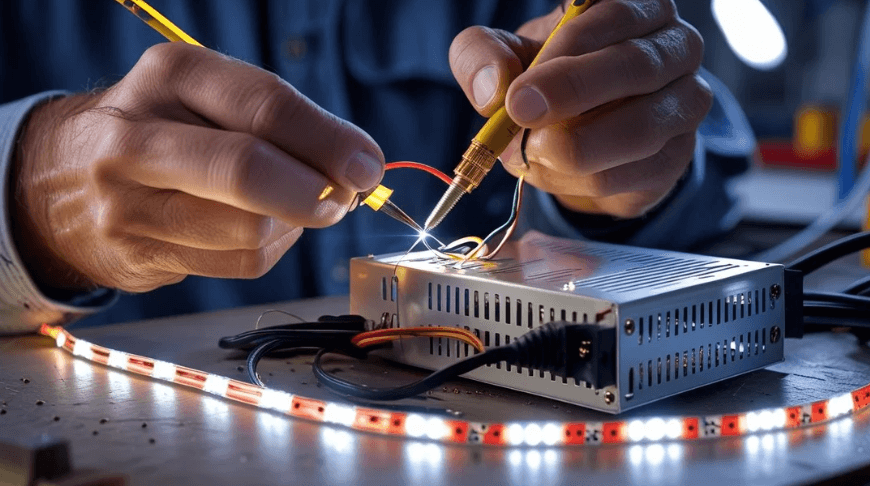
Briefly explain that an LED lighting system depends on more than the light itself. The power supply affects voltage stability, performance, safety, and operating reliability.
Introduce the idea that choosing compatible lighting and electrical components should happen together.
Understanding the Main Components of an LED Lighting System
Explain the basic relationship between:
• LED strips and modules
• Controllers and connectors
• LED power supplies
• Wiring and installation components
Discuss why each component needs to work within the correct electrical specifications.
What to Consider When Choosing LED Lighting
Explain the main factors that influence LED lighting selection:
• Required brightness
• Color temperature
• Voltage
• Installation location
• Indoor or outdoor use
• Strip length
• Heat management
• Desired lighting effect
Naturally discuss how different applications can require different LED products.
Why Manufacturer Selection Can Affect Product Compatibility
Discuss what buyers should examine when evaluating an LED Lights Manufacturer in China.
Cover factors such as:
• Product range
• Manufacturing experience
• Quality control
• Product testing
• Technical documentation
• Certifications
• Available voltage and configuration options
Choosing the Correct Voltage for LED Applications
Explain the difference between common low-voltage systems such as 12V and 24V.
Discuss why the LED light and power supply must use compatible voltage.
Explain what can happen when the wrong voltage is selected, including unstable operation, excessive heat, or component damage.
How to Calculate Power Requirements
Explain the basic approach to determining the required power supply capacity.
Cover:
• LED wattage per meter
• Total installation length
• Total power consumption
• Additional capacity for practical operation
Give a simple example showing how a buyer can estimate the required wattage before selecting a power supply.
When a Waterproof Power Supply Is Appropriate
Explain why environmental conditions matter when selecting a Waterproof Led Power Supply.
Discuss applications involving:
• Outdoor signage
• Landscape lighting
• Exterior architectural lighting
• Garden installations
• Areas exposed to moisture
• Other demanding installation environments
Protection Features Worth Checking
Explain common protection features found in LED power supplies, including:
• Over-voltage protection
• Over-current protection
• Short-circuit protection
• Stable constant-voltage output
• EMC considerations
Explain why these features matter for the connected LED lighting system.
Waterproof, Rainproof, and Indoor Power Supplies
Create a simple comparison between different environmental protection levels.
Explain that a waterproof model should be selected according to the actual installation conditions rather than simply choosing the highest protection level.
Discuss enclosure design, installation position, ventilation, and exposure to moisture.
Common Mistakes When Pairing LEDs With Power Supplies
Cover practical mistakes such as:
• Selecting the wrong output voltage
• Choosing insufficient wattage
• Ignoring environmental conditions
• Overlooking heat dissipation
• Using unsuitable wiring
• Connecting too many LED strips to one supply
• Failing to check product specifications
A Practical Checklist Before Installation
Provide a concise checklist covering:
• LED voltage
• Total wattage
• Required power supply capacity
• Installation environment
• Protection requirements
• Wiring distance
• Heat dissipation
• Product certifications
• Connector compatibility
See also: Crypto Security Tips for Beginners
Conclusion: Build the Lighting System Around Compatibility
Summarize why LED lights and power supplies should be selected as one complete system.
Emphasize matching voltage, wattage, environmental protection, and installation requirements before purchasing or installing components.