In the early 2020s, the buzzword in American universities was “hustle.” Students were encouraged to stack their resumes, maintain a 4.0 GPA, and lead multiple organizations—all while navigating a global shift in digital learning. However, by 2026, the pendulum has swung. According to recent data, nearly 40% of US college students report persistent feelings of academic exhaustion, with 35% identifying chronic stress as the primary barrier to their success (Research.com, 2026).
This crisis has birthed a new movement: Realistic Productivity. It is the psychological shift from “doing it all” to “doing what matters.” This article explores the mechanics of burnout and why delegating tasks is no longer seen as a shortcut, but as a survival strategy for the modern American scholar.
The Neurobiology of the “Burnt-Out” Brain
Academic burnout isn’t just “feeling tired”; it is a state of vital exhaustion. When a student faces a relentless workload—from complex SQL data projects to intricate ethical deconstructions—the brain’s prefrontal cortex, responsible for executive function, begins to fatigue. This leads to a “cognitive fog” where even simple tasks feel insurmountable.
In subjects that require deep, abstract reasoning, this fatigue is even more pronounced. For instance, students tackling the works of Kant or Nietzsche often find that their analytical bandwidth is stretched thin. Engaging with professional philosophy assignment help has become a common “Realistic Productivity” tactic. By collaborating with experts to break down dense ontological arguments, USA students are able to preserve their mental energy for their core major requirements without sacrificing their GPA.
Why Academic Burnout in the USA is Peaking in 2026
Several specific factors have converged to make this year the most taxing in history for American students:
- The “Portfolio” Pressure: Students are no longer just earning degrees; they are building GitHub repositories, LinkedIn networks, and micro-credentials simultaneously.
- The EEAT Standards of Grading: Professors in 2026 have moved away from generic testing toward “high-EEAT” assignments that require deep original research, increasing the time required per credit hour.
- Economic Hyper-Competition: With the average cost of attendance at US private colleges exceeding $60,000 per year, the “fear of failure” creates a chronic state of high cortisol.
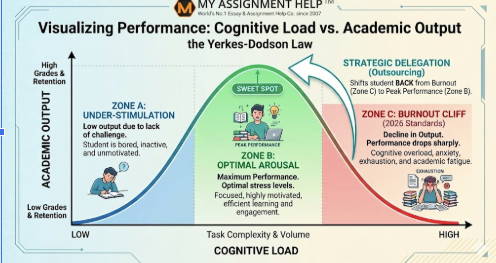
To combat this, the modern student mindset has shifted toward strategic delegation. It is now common for students to decide to do my homework via specialized platforms for elective or foundational courses. This allows them to focus their “peak brain hours” on high-stakes internships and career-aligned networking, effectively managing their limited cognitive resources and avoiding the “Burnout Cliff” illustrated above.
See also: Technology Innovations in Healthcare Devices
Key Takeaways for Realistic Productivity
- Audit Your Energy, Not Just Your Time: Identify which subjects drain you most and seek support before the “fog” sets in.
- Prioritize High-ROI Tasks: Focus on the 20% of coursework that directly impacts your career path.
- Leverage Expert Networks: Using academic support services is a professional management skill—learning to outsource routine tasks prepares you for corporate leadership.
- Sleep is a Performance Metric: In 2026, rest is recognized as a non-negotiable component of high-level cognitive function.
Strategic Comparison: Old Productivity vs. Realistic Productivity
| Feature | Old Productivity (Pre-2024) | Realistic Productivity (2026) |
| Primary Goal | Maximum Volume of Work | Optimal Mental Well-being |
| Mental State | “Sleep when you graduate” | “Sleep to succeed” |
| Task Management | Struggle through every line alone | Delegate routine tasks to experts |
| Focus | Cumulative GPA only | Quality of Skills & Portfolio |
FAQ Section
1. Is “Realistic Productivity” just another word for procrastination?
No. Procrastination is avoiding work out of fear. Realistic Productivity is the intentional management of one’s workload—including using expert support—to ensure long-term academic health.
2. How do I know if I’m experiencing burnout or just a bad week?
Burnout is characterized by “detachment” and a sense of “ineffectiveness” that lasts longer than two weeks. If you no longer care about your grades in your favorite subjects, it is a significant red flag.
3. Why should I use professional help for Philosophy specifically?
Philosophy is a “high-context” subject. Unlike math, which often has clear formulas, philosophy requires nuanced, human-driven argumentation. Expert support helps you navigate these nuances without the 40+ hours of reading usually required.
Author Bio
Lachlan Miller is a Senior Academic Strategist at MyAssignmentHelp. With over a decade of experience in EdTech and a background in Educational Psychology, Lachlan specializes in helping USA students navigate the transition from traditional academic pressure to modern, sustainable study habits. He is a frequent contributor to journals focusing on student mental health and SEO-driven educational content.
References
- Healthy Minds Network (2025). “College Student Depression and Anxiety: A Three-Year Trend Analysis.” University of Michigan.
- Research.com (2026). “50 Current Student Stress Statistics: Data, Analysis & Predictions.”
- APA (2025). “Stress in America: A Crisis of Connection.” American Psychological Association.
- CDC (2026). “Adolescent and School Health Reports: Mental Health Surveillance & Academic Correlates.”